Besotted by language: The brilliant ornery inspired reverent irreverent Brian Doyle
“Joyas Voladoras” by Brian Doyle opens:
Consider the hummingbird for a long moment. A hummingbird’s heart beats ten times a second. A hummingbird’s heart is the size of a pencil eraser. A hummingbird’s heart is a lot of the hummingbird. Joyas voladoras, flying jewels, the first white explorers in the Americas called them, and the white men had never seen such creatures, for hummingbirds came into the world only in the Americas, nowhere else in the universe, more than three hundred species of them whirring and zooming and nectaring in hummer time zones nine times removed from ours, their hearts hammering faster than we could clearly hear if we pressed our elephantine ears to their infinitesimal chests.
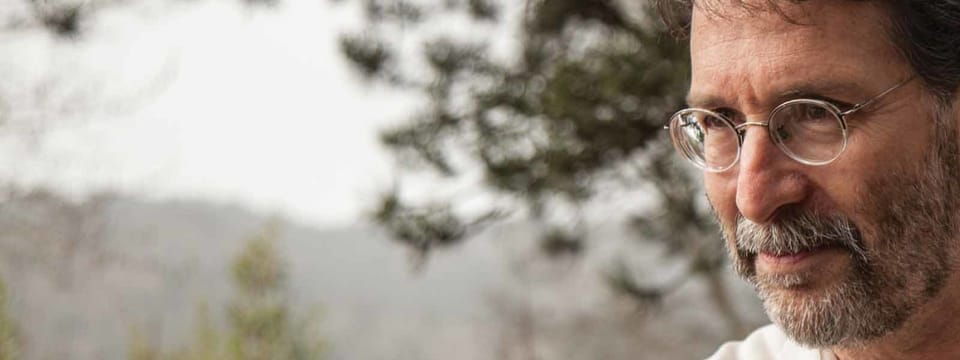
Brian Doyle was a friend, a colleague, an exemplar, and an inspiration.
No. I can do better than that. The cordoning of the nouns by indefinite articles and commas makes that sentence less apt and less antic and less horsepowered than it ought to be. A more Doylesque sentence: Brian Doyle was a friend and colleague and exemplar and inspiration. Better, more voltage when the commas drop by the wayside, but still pale, anemic, constrained. To be truly Doylesque I need to let the words loose. So: For more than 20 years Brian Doyle was my word-drunk Irish-descended Van Morrison–quoting William Blake–smitten opinionated occasionally profane caustic ribald feisty Roman Catholic enemy-of-the-comma anti-Strunk & White and exuberant friend and colleague and exemplar and inspiration.
When he defined himself he was more restrained. He called himself a storycatcher.
In my time I’ve been friend or friendly acquaintance or correspondent to many wonderful adroit inspired writers, famous and not, including Alice McDermott, Susan Orlean, Rosemary Mahoney, Joe McGinniss, Stephen Dixon, John Irwin, Sally Jenkins, Ann Finkbeiner, Jacqui Banaszynski, Anne Fadiman, and Mark Strand. Best of them all was Brian James Patrick Doyle. He was a superb essayist who approached the scribbling life with joy and zeal. While being a devoted spouse to a painter named Mary Miller and raising three kids and editing a fine magazine at the University of Portland, he somehow found time and energy to write enough onrushing sentences to fill 28 volumes of fiction, essays, and poetry before the cosmic injustice of a glioblastoma took his life at age 60. Sometimes even his titles exhibited his antic profluent verve: an essay collection from 1993 was resplendantly called Credo: Essays on Grace, Altar Boys, Bees, Kneeling, Saints, the Mass, Priests, Strong Women, Epiphanies, A Wake, and the Haunting Thin Energetic Dusty Figure of Jesus the Christ. I suspect his publisher insisted on the commas.
I marveled at him, and now and again gave in to a pissy envy of his talent that always evaporated in a day or so. He knew my solitary moodiness and when I was named editor of Johns Hopkins Magazine he sent a note that said, “Ha-ha! Now you have to talk to people every day!” In another note, he said, “Do not let yourself forget that you are one of the finest character storytellers I have ever seen.” Best compliment I ever got.
Brian published “Joyas Voladoras” in the Autumn 2004 edition of The American Scholar. It is brief enough to be reproduced in full here, and it merits the attention. The first sentence—scroll up if you need to review, I’ll wait—is unassuming but as a lead is really a seven-word walk on a wire. The limp and imploring “consider the hummingbird” invites, “Eh, no thanks, what’s on the next page?” But it’s followed by a subtle hook—“long moment.” Moments aren’t long, moments are momentary, what’s he on about? Just like that you’re snagged by the incantatory cadence of “a hummingbird’s heart” and that sequence of striking fact (“beats ten times a second”) and then striking image (“the size of a pencil eraser”) and then a touch of understated wonder (“is a lot of the hummingbird”). Then comes the sort of emblematic sentence we could rightly designate a Doyle, 86 words long and brimming with facts and wonder and unlikely but perfectly apt words and phrases—“nectaring” and “elephantine ears” pressed to “infinitesimal chests.”
By the end of that graph, Doyle has flashed some of his cocky skill and all but dared you: Go ahead. Stop reading.
You don’t.
Each one visits a thousand flowers a day. They can dive at sixty miles an hour. They can fly backwards. They can fly more than five hundred miles without pausing to rest. But when they rest they come close to death: on frigid nights, or when they are starving, they retreat into torpor, their metabolic rate slowing to a fifteenth of their normal sleep rate, their hearts sludging nearly to a halt, barely beating, and if they are not soon warmed, if they do not soon find that which is sweet, their hearts grow cold, and they cease to be. Consider for a moment those hummingbirds who did not open their eyes again today, this very day, in the Americas: bearded helmet-crests and booted racket-tails, violet-tailed sylphs and violet-capped woodnymphs, crimson topazes and purple-crowned fairies, red-tailed comets and amethyst woodstars, rainbow-bearded thornbills and glittering-bellied emeralds, velvet-purple coronets and golden-bellied star-frontlets, fiery-tailed awlbills and Andean hillstars, spatuletails and pufflegs, each the most amazing thing you have never seen, each thunderous wild heart the size of an infant’s fingernail, each mad heart silent, a brilliant music stilled.
He was attentive to the facts that convey wonder and he knew when to let them speak. And he was besotted by language. I imagine him reading about hummingbirds, before he’d written a word, and coming across “violet-tailed sylph” or “spatuletail” or “fiery-tailed awlbill” and first marveling at his luck that any genus or species of bird could have such names and then throwing 16 of them into a 97-word bebop trumpet blast of a sentence just for the music of it all.
In the same graph he slips in another mention of hearts. That’s not what stands out the first time you read through the wondrous hummingbird data and that list of fantasmic names. But at the end he comes back to “each thunderous wild heart,” introducing poignance and loss and declaring his true subject.
To write an essay is to work out and discover on the page what you, the essayist, know and think and feel. There’s a vulnerability to letting the world see how your mind works, opening your process to doubt and critique and maybe ridicule. But it’s the process that enables the form. If everything is known to the writer before pen meets paper, the essay will flatline. Brian read about hummingbirds and thought about hummingbirds and as he was sorting it all out on paper he discovered that what had snared his heart was their hearts. Awake to where he could go with that, he had found something true to tell us.
Hummingbirds, like all flying birds but more so, have incredible enormous immense ferocious metabolisms. To drive those metabolisms they have race-car hearts that eat oxygen at an eye-popping rate. Their hearts are built of thinner, leaner fibers than ours. Their arteries are stiffer and more taut. They have more mitochondria in their heart muscles—anything to gulp more oxygen. Their hearts are stripped to the skin for the war against gravity and inertia, the mad search for food, the insane idea of flight. The price of their ambition is a life closer to death; they suffer more heart attacks and aneurysms and ruptures than any other living creature. It’s expensive to fly. You burn out. You fry the machine. You melt the engine. Every creature on earth has approximately two billion heartbeats to spend in a lifetime. You can spend them slowly, like a tortoise and live to be two hundred years old, or you can spend them fast, like a hummingbird, and live to be two years old.
Wonder anchored in the precision of facts gleaned from deep reading. Then, a key change, from the world’s smallest hearts to its largest:
The biggest heart in the world is inside the blue whale. It weighs more than seven tons. It’s as big as a room. It is a room, with four chambers. A child could walk around it, head high, bending only to step through the valves. The valves are as big as the swinging doors in a saloon. This house of a heart drives a creature a hundred feet long. When this creature is born it is twenty feet long and weighs four tons. It is waaaaay bigger than your car. It drinks a hundred gallons of milk from its mama every day and gains two hundred pounds a day, and when it is seven or eight years old it endures an unimaginable puberty and then it essentially disappears from human ken, for next to nothing is known of their mating habits, travel patterns, diet, social life, language, social structure, diseases, spirituality, wars, stories, despairs and arts of the blue whale. There are perhaps ten thousand blue whales in the world, living in every ocean on earth, and of the largest animal who ever lived we know nearly nothing. But we know this: the animals with the largest hearts in the world generally travel in pairs, and their penetrating moaning cries, their piercing yearning tongue, can be heard underwater for miles and miles.
Facts ignite his imagination; the mind prompts the heart.
Mammals and birds have hearts with four chambers. Reptiles and turtles have hearts with three chambers. Fish have hearts with two chambers. Insects and mollusks have hearts with one chamber. Worms have hearts with one chamber, although they may have as many as eleven single-chambered hearts. Unicellular bacteria have no hearts at all; but even they have fluid eternally in motion, washing from one side of the cell to the other, swirling and whirling. No living being is without interior liquid motion. We all churn inside.
What a deft turn that is, from the fact of 2 billion beats of something small as an eraser or big as a shack to pondering our own fraught lives. Slick as a card trick. Words about the amethyst woodstars and the rainbow-bearded thornbills and the great blue whale have led Doyle back to the great preoccupation of his scribbling life, the human heart. Brian’s mind was deep and reverent and playful and joyous, but never oblivious to the heart’s dark chambers. When life turned sad or tragic or haunted, he never looked away. In the last paragraph of “Joyas Voladoras,” he throws himself into a gorgeous meditation that is heartbreaking in its profound beauty and clarion truth.
So much held in a heart in a lifetime. So much held in a heart in a day, an hour, a moment. We are utterly open with no one in the end—not mother and father, not wife or husband, not lover, not child, not friend. We open windows to each but we live alone in the house of the heart. Perhaps we must. Perhaps we could not bear to be so naked, for fear of a constantly harrowed heart. When young we think there will come one person who will savor and sustain us always; when we are older we know this is the dream of a child, that all hearts finally are bruised and scarred, scored and torn, repaired by time and will, patched by force of character, yet fragile and rickety forevermore, no matter how ferocious the defense and how many bricks you bring to the wall. You can brick up your heart as stout and tight and hard and cold and impregnable as you possibly can and down it comes in an instant, felled by a woman’s second glance, a child’s apple breath, the shatter of glass in the road, the words I have something to tell you, a cat with a broken spine dragging itself into the forest to die, the brush of your mother’s papery ancient hand in the thicket of your hair, the memory of your father’s voice early in the morning echoing from the kitchen where he is making pancakes for his children.
That last sentence deploys 101 words as expertly mortised as a Shaker cabinet, a 101-note chord that leaves the writer in me speechless. How the hell do you do that? I ask, and then I try myself, because work like this makes me want to work the rest of my days.
Twenty-three years ago, Brian sent me a note that read, “Sometimes I wonder if I came to my form because I had no choice really as to how to shape the benign neurosis that is the writing urge; but then I think I would be a shitty novelist, and I suck at the other genres. You see I am a pragmatic cuss in my elder years.” He didn’t get elder years, and he knew full well that calling himself a shitty novelist was what his Irish ancestors might have called blarney and my flinty Scotch-Irish pissant ancestors would have called horseshit. He was a very good novelist and you don’t write six of them if you think they’re shitty. But I suspect he wrote his novels because they were fun. He wrote essays because he had to. Without them he could not know his own mind and his own heart, and that would not do. There is no joy in not knowing, and Brian was always ready for joy.
Maybe a dozen years ago, he wrote a short, sweet piece called “Last Prayer,” and its first line was this: “Dear Coherent Mercy: Thanks. Best life ever.”
I believe him.
And finally, can you imagine a phrase more arresting and beautiful than “fear of a constantly harrowed heart?” I cannot.
Coda
A few of Brian Doyle’s books, available on Dr Essai’ aisle at Bookshop.org:
- One Long River of Song, essays.
- The Adventures of John Carson in Several Quarters of the World, a novel.
- The Grail: A Year Ambling & Shambling Through an Oregon Vineyard in Pursuit of the Best Pinot Noir Wine in the Whole Wild World, travelogue, of a sort. With wine.
The Joggled Mind will always be free for the taking. But if you would care to support Dr Essai in his endless quest to write as well as the scribblers he admires, here is your chance. As always, thank you for reading.
Member discussion