Cal Flyn will rewild your mind
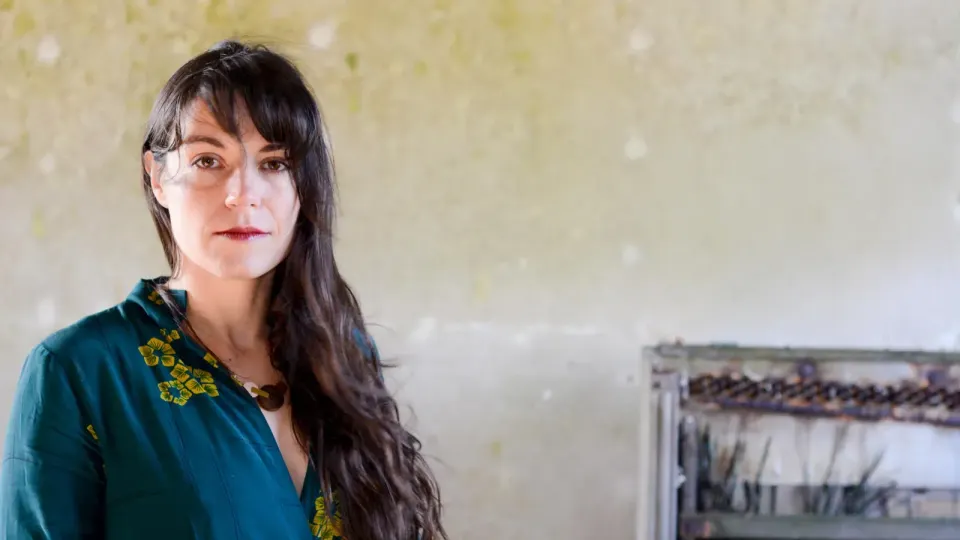
Scottish writer Cal Flyn sent a book idea to her agent in May 2017: “That was just a few paragraphs, really, but the title was there, and the idea of looking for beauty in post-industrial and other ‘post-human’ places.” The title was Islands of Abandonment: Nature Rebounding in the Post-Human Landscape, and the book became an account of Flyn putting herself in a dozen devastated landscapes — some devastated by nature, most devastated by humans — to observe and find meaning in their reclamation by plants and animals. She went to radioactive Chernobyl; abandoned blocks of urban Detroit; the empty no-man’s land separating Greek and Turkish Cyprus; acres of Montserrat smothered by a volcanic eruption; and a section of a First World War battlefield so full of unexploded ordnance and poisons that it is still too dangerous to inhabit, or even stroll through.
No matter what has blighted a landscape, life comes back and reclaims it. This is what nature does: it inhabits. That process and the phenomena that ensue are so interesting that were Flyn merely a conventionally observant journeyman writer, Islands of Abandonment would still be a fascinating book, on an intellectual level. What makes it an exceptional book is Flyn's imagination, capacious intelligence, and skill and dexterity with language.
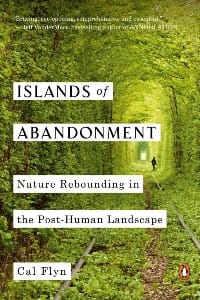
The full range of her abilities are embodied in the book’s eighth chapter, “Forbidden Forest: Zone Rouge, Verdun, France.” Zone Rouge is the fenced-off part of the battlefield that, 110 years on, remains too dangerous for people. The Battle of Verdun began on February 21, 1916 when the German Fifth Army attacked fortified positions of the French Second Army. It lasted 302 days. (The Battle of Gettysburg raged for three days; Waterloo culminated in less than 11 hours.) The consensus on casualties — about 715,000 soldiers killed, gassed, mutilated, or never seen again. All for control of eight square miles of French ground.
People have been writing about war since Homer. Most of them were no Homer. Cal Flyn was up against centuries of rote, clichéd, leaden accounts of battle that have no capacity to make us feel anything and dulled our responses — Great Men of History moving blocks of troops about like chess pieces, ungraspable casualty figures, fog of war, gallantry and sacrifice, tragic mistakes, noble causes appended to make the bloodshed seem worthwhile. She had to activate the reader’s long dormant visceral responses to war, and because she was writing a book about nature, not the First World War, she had to do it in a few paragraphs. She had to invent new language for the world’s oldest literary subject.
What to do? Allude to the incomprehensible scale of the savagery, but keep the perspective on the ground. Evoke the experience of the individual rifleman terrified in a flooded, fetid trench. Reimagine the language of battle. Flyn begins with the German bombardment that marked the battle’s beginning:
This was merely the opening bombardment in a battle that would rage through the days and weeks and months to come. Soon this hellfire would become normality: the constant storm of artillery, a thunder reverberating in the chests and the lungs; the earth a pulverized mass of mud and clay and jellied blood and fragments of bone, flesh, and shrapnel pounded into paste; the corpses piling mutilated in the trenches, entrails spilling — buried in a tide of filth only to be blown bare once more. Men struggling with rifles in mud-soaked uniforms, on their knees in filthy water, stepping on the bodies of the dead. Gibbering men, sent mad by fear; silent men, sinking, shell-shocked, to the ground, emptied out by the horror of it; grim-faced men, following orders, fighting.
The first sentence doesn’t land until the end of the paragraph, which is extraordinary: Flyn evokes the horror, and only at the end does the reader recall that early temporal establishing shot: a battle that would rage through the days and weeks and months to come. She puts us in that dreadful present, feeling it through multiple senses: the force felt in our very lungs, the overwhelming sounds, and the revolting visual landscape. Her language here is simultaneously searing and mesmerizing, with an incantatory cadence that recalls those ancient recited epics of the Trojan War: “the earth a pulverized mass of mud and clay and jellied blood and fragments of bone, flesh, and shrapnel pounded into paste.” Who has ever described battle like that? No one I know. The end of the passage is one last bit of genius — she pulls back from a soldier’s individual point of view to the masses of men caught in this maelstrom, and what it did to them by the tens of thousands. Gibbering men, silent men, grim-faced men following orders.
There is not one cliché granting glib, unearned relief from the carnage, that lets us put our haunted primal mind out of gear through reassuring banality. In 133 words she says all that matters about the overwhelming dimensions of the cataclysm without ever pulling back from what each stunned foot soldier felt, heard, smelled, and saw.
After the guns of Verdun fall silent, Flyn sets her gaze, and ours, on the book’s main character, the ever-resilient earth. This is her essential pivot from the harm people do to the resilience of nature:
When, finally, it came to an end, survivors emerged as if from a nightmare and looked upon an annihilated landscape, a barren wilderness that stretched off in every direction without landmark. Perhaps 40 million shells had been fired in these hills, more than six shells to every 10 square feet of ground. They left behind a churned-up sea which pitched and rolled with unseen currents. Bleaching bones and the broken limbs of rifles protruded from the wave. Between 1914 and 1918, the soil had undergone the equivalent of 10,000 years of natural erosion.
All that remained of the ancient forests of Spincourt and the nine villages détruits — the “villages that died for France” — were the shards of trees poking haphazardly as tombstones; the rubble of stone foundations; the knotted strands of barbed wire. A dead zone, a flayed and featureless creature stretching off in all directions.
The French are still working to remediate the toxic heavy metals that permeate the ground. Generations will pass before the fences can come down, if they ever do. Flyn does glimpse natural reclamation, even on such benighted ground.
Here, life lurks in the folds and wrinkles: fifteen species of fern jostle for space in shadows; thyme scrambles over dry rock, searching for purchase where the trees found none; ponds form in the craters, in which skulk newts and yellow-bellied toads. Rare orchids arise along the edge lands. Songbirds lift their voice in praise. Vegetation breathes. Here one feels at once the astonishing fortune of living in such a vast and endlessly forgiving world; the beauty of it; the blessed relief. If there is a God, he may yet be revealed as a merciful one.
The author’s other eleven islands of abandonment are illuminated with as much sensitivity, skill, and artistry. The book will move your heart and lodge in your mind. Flyn has a keen eye and a keen mind and a vast literary talent. She merits a wide readership.
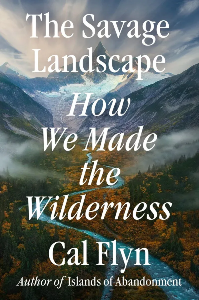
Cal Flyn has a new book coming out in two weeks, The Savage Landscape.
Thank you for reading, dear Jogglers. The Joggled Mind takes no advertising and does not sell readers’ data. If you would like to contribute by becoming a voluntary paid subscriber, please click the button below, and bless you.
Member discussion